
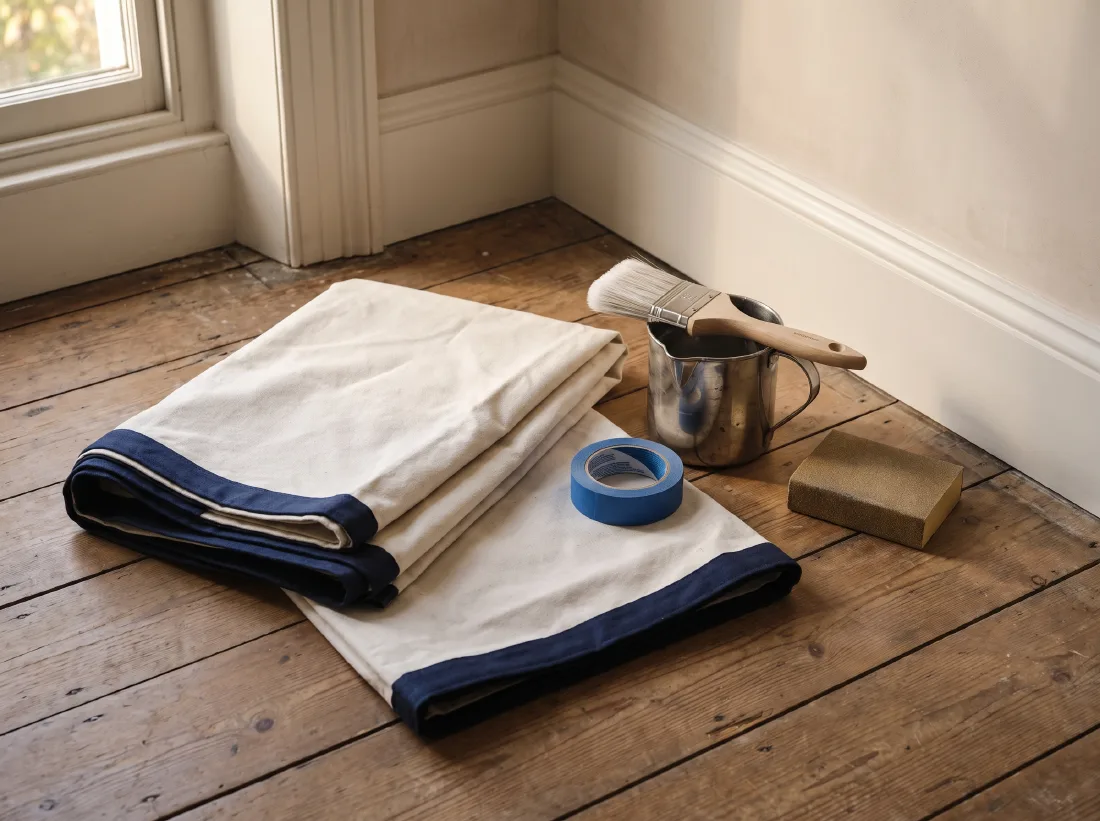
Clear and protect before anything else
Move what you can out, bring the rest to the middle and cover it. Cover the floor completely, not just the edges — paint travels further than you expect.
Take off what comes off: switch plates, door hardware, curtain fittings. Masking around them takes longer than removing them and never looks as clean.
Clean, then fill, then sand
Walls in kitchens, hallways and anywhere near a door collect grease and grime. Paint over that and it will not bond. Sugar soap and a rinse first.
Then fill, let it dry properly, and sand flush. Rushing the drying is the most common DIY mistake — filler that is still green shrinks after you have painted it and leaves a dish.
Spot prime any bare filler and any patches, or they will flash a different sheen through the finished coat.
Ceiling first, then walls, then trims
Work top down so drips land on surfaces you have not finished yet. Ceiling, then walls, then skirtings and architraves last.
Cutting in comes before rolling for each surface — brush the edges, then roll into the wet brushwork so the textures blend. Let the cut-in dry first and you will see a picture frame around every wall.
Two coats, properly spaced
Respect the recoat time on the tin. Recoating too soon lifts the first coat and leaves the surface patchy, and it is one of the few mistakes that is hard to fix without starting again.
Keep a wet edge and work in manageable sections. Going back over paint that has started to set is what causes roller lap marks.
When not to do it yourself
High ceilings and stairwells. The access is the whole job, and it is where people get hurt.
Significant wall damage, or any repair somewhere with raking light. Filling is easy; making a repair invisible is not.
Dramatic colour changes, where coverage problems are expensive to discover halfway through.
Old Brisbane homes with layers of enamel on the trims, where the preparation is specialist work and the finish shows every shortcut.