
Paint touch-ups
Scuffed walls, marked skirting boards and tired patches brought back without repainting the room — matched for colour an…
Read moreServices
Patch & PaintWall repairs & gyprock patchingPaint touch-upsCeiling repairs & repaintingGuides
Fixing holes in wallsPeeling & flaking paintInterior PaintingSingle room & bedroom paintingCeiling paintingFeature walls & colour changesGuides
What it costs to paint a roomHow to paint a roomExterior, Doors & TimberDoors, frames & trimsFence & gate paintingDeck & outdoor timber stainingGuides
How to paint a doorStaining a deck in BrisbaneHow to paint a fenceRental, Pre-Sale & CommercialRental property touch-upsPre-sale paintingSmall commercial & office paintingGuides
Painting a rental propertyMore
Gallery Reviews About Tony Contact Get a Quote Call 0433 123 785Plaster repair & wall crack repair, Brisbane
Holes, cracks, dents and damaged plasterboard repaired and painted back to match — so the fix disappears into the wall instead of standing out under the light.
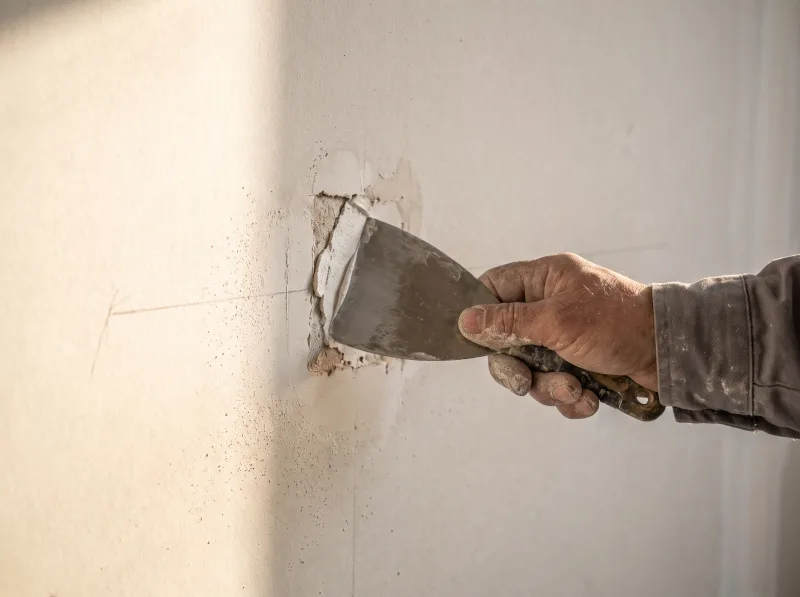
Most walls pick up damage long before they need repainting. A shelf comes down and takes a chunk of plasterboard with it, a door handle punches through, settlement opens a hairline crack above a doorway, or a removalist puts a trolley through the hallway. None of it warrants repainting the house — but all of it is visible every day.
This is the work TFS is best known for. Tony repairs the damage and paints it back in, so you are dealing with one tradesperson rather than booking a plasterer and then trying to find a painter to follow them.
Small holes get filled. Anything larger than a few centimetres needs a patch cut and keyed into the surrounding sheet, or it will telegraph through the topcoat within months.
Filler is applied in coats rather than one thick pass, so it dries evenly and does not shrink back and leave a dish in the wall.
The repair is sanded back flush and checked in raking light — the only reliable way to see whether a patch will show once it is painted.
Bare filler is sealed before painting, otherwise it drinks the topcoat and flashes a different sheen to the wall around it.
Also under Patch & Paint
Scuffed walls, marked skirting boards and tired patches brought back without repainting the room — matched for colour an…
Read moreCracked, stained or damaged ceiling sections repaired and repainted — including the water-stain touch-ups that get left …
Read more